Liu Cao

Hello there! I'm Liu Cao, currently a first-year PhD student in IIIS, Tsinghua University, advised by Prof. Mengdi Xu on Humanoid Robots and Whole-body Control. Before that, I received my bachelor's degree from EE, Tsinghua University.

My current interests lie in developing autonomous robots, particularly humanoid and mobile manipulators, capable of active perception and interacting in the real-world scenarios.

I am lucky to work closely with Botian Xu.

Research

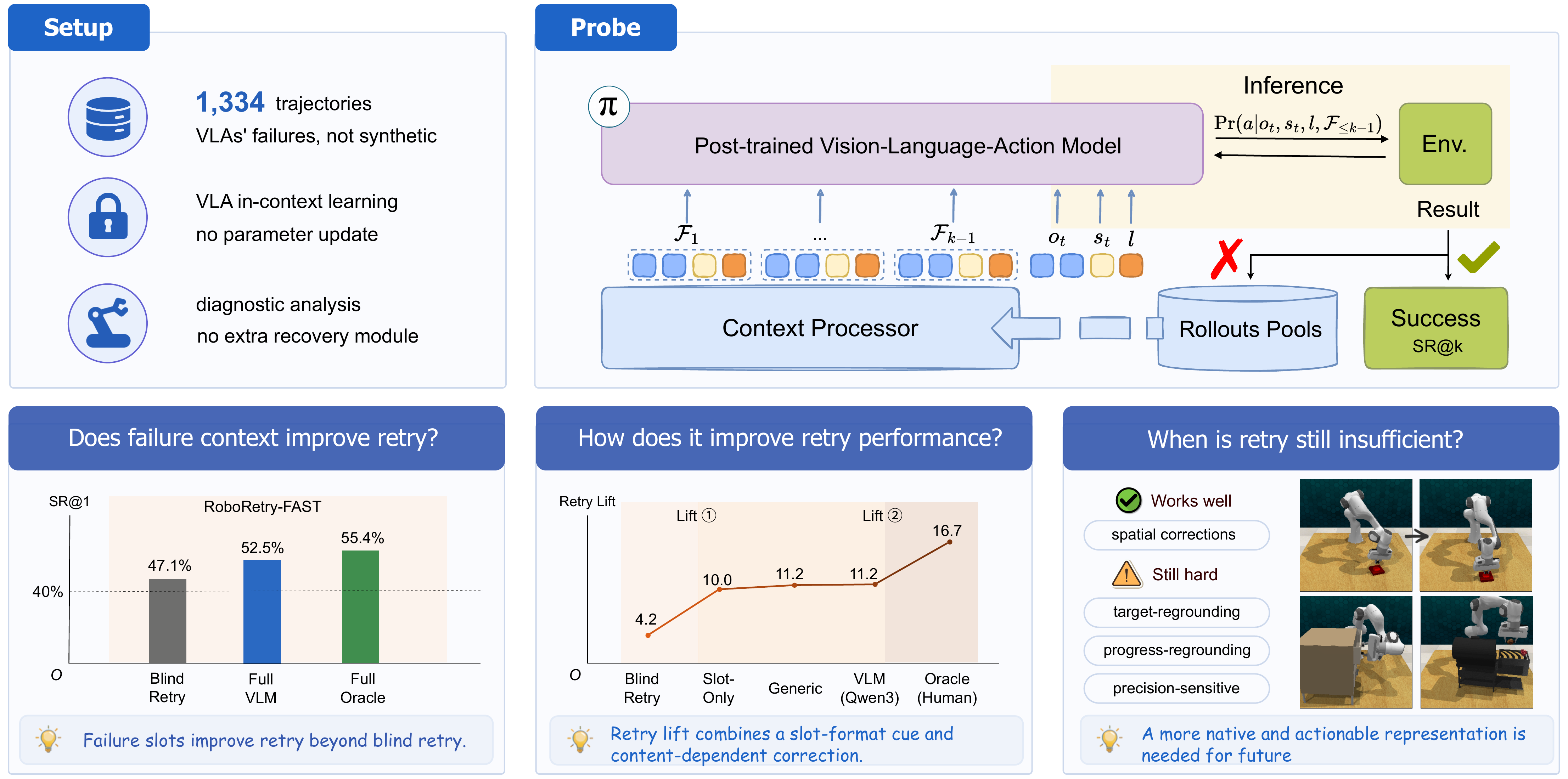
RoboRetry — overview figure
What Do VLAs Actually Learn through In-Context Failure Conditioning?
Jiajun Liu, Jieming Li, Zi Zhuang, Hang Yu, Qingli Chen, Liu Cao, Yingxi Lu, Ruoqu Chen, Yuhang Cao, Chenyu Zhang, Yankai Lin, Mengdi Xu
3D-LLM/VLA Workshop, CVPR, 2026
project page / code

Using RoboRetry as a controlled probe across 12 RLBench tasks, we study whether vision-language-action policies actually learn from prior failures via in-context conditioning, disentangling a slot-presence effect from content-dependent gains, and release FailureSlot, a dataset of 1,334 annotated failure trajectories.

Hybrid Internal Model: Learning Agile Legged Locomotion with Simulated Robot Response
Junfeng Long*, Zirui Wang*, Quanyi Li, Jiawei Gao, Liu Cao, Jiangmiao Pang
*Equal contribution
International Conference on Learning Representations (ICLR), 2024
project page / arXiv

We present the Hybrid Internal Model, a method enabling the control policy to estimate environmental disturbances by only explicitly estimating velocity and implicitly simulating the system's response.

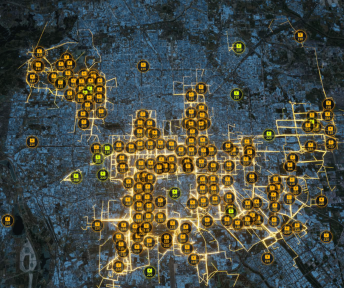
Detecting Vulnerable Nodes — teaser figure
Detecting Vulnerable Nodes in Urban Infrastructure Interdependent Network
Jinzhu Mao*, Liu Cao*, Chen Gao, Huandong Wang, Hangyu Fan, Depeng Jin, Yong Li
*Equal contribution
ACM SIGKDD Conference on Knowledge Discovery and Data Mining (SIGKDD), 2023
code / arXiv

We model the interdependent network as a heterogeneous graph and propose a system based on graph neural network with reinforcement learning, which can be trained on real-world data, to characterize the vulnerability of the city system accurately.